


Plan Your Perfect Fall Sheep and Wool Festival Visit
A Fall sheep and wool festival can be pure joy, right up until the moment every booth starts to look tempting, the barns pull you in another direction, and your tote bag is somehow full before lunch.
September through November is prime time for local sheep and wool festivals across the Northeast. These events bring together hand-dyed yarn, fleece, spinning fiber, tools, finished goods, sheep, alpacas, goats, demonstrations, food vendors, and fiber people who love talking about what they make. That mix is what makes the day so much fun. It can also make the day feel like a lot. In September, we start with the Adirondack Wool and Arts Festival, then in October you have the Vermont Sheep and Wool as well as the New York Sheep and Wool Festival, aka Rhinebeck. Finally, in November you have the New England Sheep and Wool.
The best way to enjoy it is simple: go in with a plan, then leave room to wander.
A good plan helps you see the vendors you care about most, stay within your budget, and avoid decision fatigue. Wandering gives you the magic part, the surprise skein, the sheep breed you have never met, the new dyer tucked in the back row, or the fiber artist whose work stops you in your tracks.
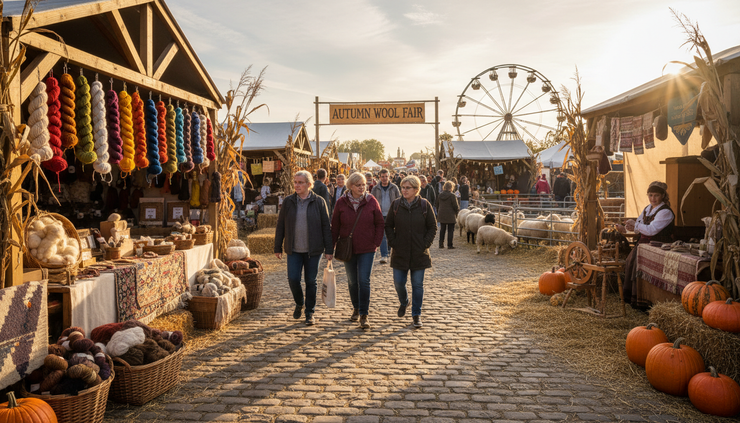
Start with the festival website before you go
Most festivals post helpful information online before the event. Start with the official website, then check the festival’s social media pages for last-minute updates. A few minutes of research can change the whole day.
Look for:
Vendor lists
Maps of barns, tents, and buildings
Class and demonstration schedules
Livestock show times
Parking information
Admission details
Food vendor locations
Accessibility notes
Pet policies
Cash, card, or ticket requirements
If the vendor list is long, do not try to memorize it. Create a short list of booths you truly want to visit. Pick your top five to ten, depending on the size of the festival. These are your “go first” stops.
That may include a favorite indie dyer, a farm selling breed-specific yarn, a toolmaker, a fleece vendor, or a fiber artist you have followed online. If a vendor is popular, their limited colors, kits, or special festival items may sell quickly. Visit those booths early, especially if you have a specific project in mind.
Social media can help here too. Many sellers post previews the week before a show. You might see festival-exclusive colorways, sweater quantities, spinning batts, project bags, or new patterns. Save the posts or take screenshots so you are not scrolling in the middle of a crowded aisle trying to remember who had the blue-green DK weight yarn.
Build a simple plan that keeps the day flexible
A good festival plan should guide you, not trap you. Think of it as a loose route.
Start by dividing the day into three parts:
First hour
Visit must-see vendors, buy limited items, check class or demo times
Midday
Eat, rest, visit animals, compare purchases, browse slower
Afternoon
Return for second looks, buy final items, wander without pressure
This rhythm works because your energy changes during the day. Early on, you are sharp and excited. That is the best time to make targeted stops. By midday, crowds may be heavier, and your brain may need a break from color, texture, and choices. Later in the day, you can return to anything that stayed on your mind.
If the festival map is available, mark your must-see vendors. Then group them by area. You will save time and steps if you visit nearby booths together instead of crossing the grounds over and over.
Leave intentional open space in your schedule. Some of the best festival finds happen when you slow down. A booth that did not stand out online may be beautiful in person. A farm may have a fleece with a hand you cannot judge from a photo. A vendor may explain a yarn base so well that it changes your project idea.
Plan the structure. Protect the surprise.
Set a budget before the yarn starts calling
Fiber festivals are full of beautiful choices. A budget does not make the day less fun. It makes the day calmer.
Decide what you can spend before you arrive. If you have a larger purchase in mind, such as a sweater quantity of yarn, a spinning wheel accessory, a loom, or a raw fleece, give that item its own category. Then set a smaller amount for extras.
A simple budget might look like this:
One planned project purchase
One smaller treat
Food and drinks
Admission and parking
Emergency cushion
The emergency cushion matters. Maybe you find the exact buttons for a cardigan. Maybe a sheep breed sample pack is too good to pass up. Maybe your favorite dyer has one last skein in a color you have wanted for months.
Cash can still be useful, even when many vendors take cards. Rural fairgrounds sometimes have spotty service, and small vendors may prefer cash for quick transactions. Bring small bills if you can. Keep receipts in one pouch or pocket so you can review your purchases later.
If you are shopping for a project, bring the pattern or at least the key details. Better yet, take a picture of it with your phone so you can pull it up even if you have spotty internet. you may not always be able to access Ravelry to look. Know the yarn weight, yardage, fiber content, and number of skeins you need. For sweaters, yardage matters more than skein count, since skein sizes vary widely.
If you are just enjoying and letting the yarn speak to you, make sure you take a picture of the project the vendor has so you remember what pattern you like. Many vendors have knit or crocheted items that they tag with the pattern name and the yarn you need to make it. I always take pics then I make a list of the yarns I got to go with that project.
Pack for comfort, weather, and easy shopping
Fall festival weather can shift fast. A chilly morning can turn warm by noon, and fairgrounds can be muddy after rain. Dress for a full day outside, even if some vendors are indoors.
Bring layers you can take off and carry. Comfortable shoes are a must. You may walk through barns, gravel paths, grass, vendor halls, and uneven ground.
A practical festival bag makes shopping easier. Choose one that leaves your hands free, such as a backpack or crossbody bag, and bring a larger tote or even a wagon for purchases.
Useful items to pack include:
Water bottle
Snacks
Hand sanitizer
Small notebook or notes app
Pen
Project pattern details
Portable phone charger
Cash and cards
Reusable tote
Any yarn or fiber samples you need to match
If you plan to buy fleece, bring a large bag or ask vendors how they package it. If you are shopping for yarn, a small notebook helps you track which skeins belong to which project. After several booths, it is easy to forget whether that beautiful worsted weight was for a hat, a shawl, or no plan at all.

Shop with your hands, eyes, and project plans
One reason sheep and wool festivals are special is that you can experience fiber in person. Online photos can show color, but they cannot fully show softness, bounce, drape, twist, or sheen.
When you visit a yarn booth, give yourself time to look closely. Notice how colors shift in natural light. Pick up the skein. Read the label. Ask questions if the vendor is available.
Good questions include:
What projects work well with this base?
Does this yarn bloom after washing?
Is this colorway repeatable?
Are there enough skeins for a sweater?
Should these skeins be alternated?
Is this fiber next-to-skin soft for most people?
How should this yarn be washed?
For hand-dyed yarn, buy enough for the full project at one time. Even repeatable colorways can vary between dye lots. If you are buying multiple skeins for a larger garment, compare them in good light. If the skeins vary, plan to alternate rows or rounds.
For spinning fiber, ask about breed, preparation, and staple length. A braid of combed top behaves differently from a batt or rolag. If you are new to spinning, tell the vendor what tools you use and what you enjoy making. Fiber artists often give helpful, practical advice.
Finished items deserve attention too. Many festivals include woven scarves, felted pieces, baskets, pottery, buttons, stitch markers, handmade soap, leather goods, and wooden tools. These are useful places to shop for gifts, especially if your yarn shelf is already full.
Visit the animals and learn from the barns
The animals are not just a side attraction. They are at the heart of the festival.
Sheep, alpacas, llamas, angora goats, rabbits, and other fiber animals help connect the finished yarn back to its source. Seeing different breeds in person can make wool feel much more interesting. A finewool sheep, a longwool sheep, and a down breed may all grow fleece, but that fleece can look and feel very different.
If the festival has breed displays, shearing demonstrations, herding demonstrations, or fleece judging, make time for them. These events can teach more in a few minutes than a long explanation online.
Follow barn etiquette:
Ask before touching any animal
Keep fingers away from mouths and horns
Do not feed animals unless a handler says it is allowed
Give handlers space to move
Keep children close in crowded barns
Avoid blocking aisles or gates
Wash or sanitize hands after visiting animals
Talk with farmers when they are not busy. Many are happy to explain their flock, fleece, yarn, or farm practices. If you buy farm yarn, ask which breed it came from and what projects suit it best. A sturdy wool might be perfect for mittens or outerwear, while a softer blend may suit hats, cowls, or sweaters.

Make time to wander and discover
After the must-see stops, give yourself permission to wander with no goal. This is where the day opens up.
Walk through the booths you did not mark. Peek into the barns. Watch a spindle demonstration. Touch a sample shawl. Look at the fleece tables. Study the colors in a booth you almost passed by. Sit with a snack and look through what you already bought.
Festivals bring together dyers, fiber artists, shepherds, toolmakers, teachers, and other makers in one place. Each booth has a point of view. One dyer may specialize in earthy semi-solids. Another may love speckles and bright contrast. A farm vendor may focus on natural-colored wool. A woodworker may make drop spindles that feel balanced the moment you try them.
Wandering also lowers the pressure to buy. You can enjoy the creativity around you without turning every booth into a decision. Take business cards or write down vendor names if you want to shop later. Many makers sell online after the event, though festival items may not always be available again.
If you find something you love but are unsure, take a photo of the booth sign and the item, if the vendor allows photos. Then walk away for a bit. If you still think about it after lunch, that is useful information.
Take breaks before you feel worn out
Festival overwhelm is real. Color, noise, crowds, choices, and walking can wear you down, even when you are having a great time.
Build breaks into the day before you need them. Sit outside. Drink water. Eat something. Step away from the busiest buildings. Look at your purchases and update your list.
A short reset can prevent tired decisions. It can also help you avoid buying five single skeins with no purpose when what you really wanted was yarn for one cardigan.
If you attend with friends, agree on meeting spots and times. Not everyone shops at the same pace. One person may want to compare every fingering weight booth, while another wants to spend half the day with the sheep. Splitting up for an hour can make the day better for everyone.
For larger festivals, check whether there is a package check, seated rest area, or shuttle. If not, plan trips back to the car as needed. Heavy bags make browsing harder.
Review your purchases before you leave
Before heading home, find a quiet spot and look through everything you bought. This small step can save frustration later.
Check that you have:
Enough skeins for each planned project
Matching dye lots when needed
Labels for every yarn or fiber purchase
Vendor names for items without packaging
Care instructions
Notions, buttons, or tools you meant to pick up
Receipts for larger purchases
If you realize you are short one skein, you may still have time to go back. If you forgot to ask about washing, the vendor may still be there. If you bought a braid of fiber and cannot remember the breed, check before you leave the grounds.
This is also a good moment to make one final loop, especially through any area you skipped. Keep it relaxed. The goal is not to squeeze every possible thing out of the day. The goal is to leave happy, inspired, and ready to make something.

Keep the festival feeling going at home
When you get home, unpack before the labels and memories disappear into a basket. Take photos of your yarn and fiber in natural light. Add project notes while the details are fresh.
If you use a project notebook or online stash tracker, record the basics:
Vendor or farm name
Yarn base or fiber breed
Yardage or weight
Colorway
Intended project
Care notes
Festival name and year
Wind nothing right away unless you plan to cast on soon. Yarn stores better in skeins, and giving yourself a little time can help you choose the right project. That special festival skein might become a cowl, but it might also work beautifully as the contrast color in a larger project later.
Follow your favorite vendors after the event if you want to keep up with shop updates, future shows, or restocks. A festival visit can be the start of a longer connection with small farms, dyers, and makers.
The best fall sheep and wool festival days have both structure and surprise. Check the website, make your must-see list, pack well, set a budget, and visit your top vendors early. Then slow down. Wander the barns. Meet the animals. Talk with artists. Let yourself discover something you did not know you were looking for.
That balance is what turns a crowded fall festival into a day you will want to repeat every year.
Dates and Links-
September 19-20: Adirondack Wool and Arts
October 3-4: Vermont Sheep and Wool
October 17-18: New York Sheep and Wool
November 7-8: New England Fiber Festival


Comments